
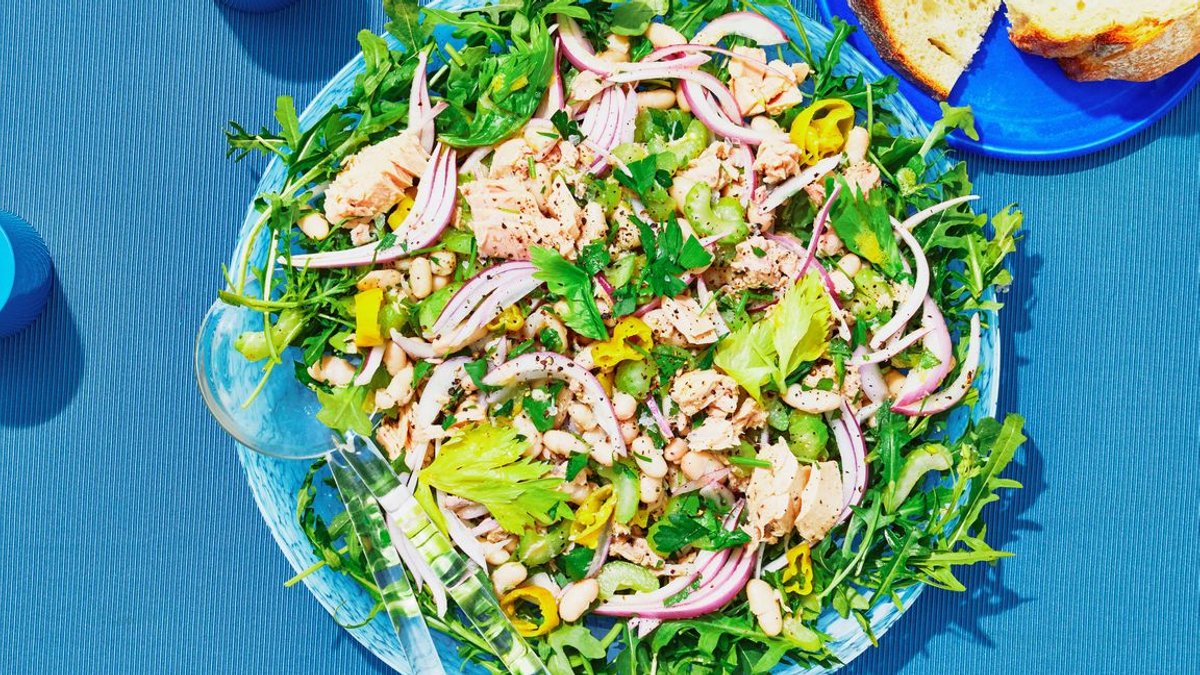
The no‑mayo tuna salad offers a lighter take on the classic deli staple, swapping creamy binders for a bright vinaigrette and crunchy vegetables.
Ingredients and assembly
Chefs start by soaking thinly sliced red onion in ice water, then whisk together brine from peperoncini, lemon zest, fresh lemon juice, Dijon mustard, a pinch of kosher salt and pepper. While whisking, a steady stream of extra‑virgin olive oil creates an emulsion.
Next, two 5‑ to 7‑ounce jars of oil‑packed tuna are added, broken into sizable chunks rather than pulverized. The drained onion, sliced celery stalks, a 15‑ounce can of rinsed white beans, coarsely chopped parsley and half‑cup of peperoncini complete the mixture, which is tossed until evenly coated.
Seasonings are adjusted with additional salt, pepper, or brine to taste. The final salad can sit in an airtight container for up to five days, according to the recipe notes.
Plating and side options
To serve, a shallow bowl is filled with tender greens such as arugula, radicchio or lettuce. A generous spoonful of the tuna blend is placed on top, then drizzled with a little extra olive oil. Celery leaves, if available, add a finishing touch.
Country‑style bread is suggested as a side, providing a sturdy base for scooping. The dish can also be paired with a simple side of pickled peppers for added acidity.
Read Also: Mango Chicken Rolls Brighten Summer Menu
Lunch‑box practicality
For meal‑prep, the salad is packed in a container separate from the greens to preserve crispness. When ready to eat, the container is shaken or the contents are transferred to a plate, allowing the vinaigrette to coat the leaves.
Because the tuna is packed in olive oil rather than water, the texture remains silky throughout the week. Storing the components apart helps maintain the bright, peppery flavor described in the original instructions.
This approach mirrors other mayo‑free options that have gained popularity, such as tahini‑based chicken salads and dill‑pickle potato mixes. Those recipes similarly rely on oil‑based dressings to keep moisture without dairy.
Compared with traditional mayo‑laden versions, the oil‑rich version feels less heavy and more suitable for those watching saturated fat intake. It also aligns with a broader trend of using beans to add protein and fiber without increasing cooking time.
Tips and variations
Using tuna in olive oil is a key step; a water‑packed product would yield a drier result. For extra heat, diners can increase the amount of peperoncini brine or add a pinch of red‑pepper flakes.
Some prefer to substitute chickpeas for cannellini beans, which changes the texture slightly but keeps the dish vegetarian‑friendly when the fish is omitted.
Overall, the recipe balances salty, tangy, and herbaceous notes, making it adaptable for both quick lunches and casual dinner tables.
Read Also: Buffalo Chicken Mac and Cheese Hits Local Menus
Nutritional perspective
Each serving supplies roughly 20 grams of protein from the tuna and beans, while the olive‑oil base contributes healthy monounsaturated fats. The fiber from the white beans helps moderate blood sugar spikes.
It stays fresh for days.
Ingredient sourcing
Choosing a high‑quality extra‑virgin olive oil enhances the mouthfeel, and freshly zesting lemon preserves aromatic oils that bottled juice often lacks. Opting for pepperoncini with firm skins adds a satisfying snap.
Serving occasions
Because the salad can be portioned ahead, it works well for potlucks, office lunches, or picnic blankets. Pairing it with a crisp Sauvignon Blanc or a light rosé complements the citrus notes without overwhelming the palate.
Make‑ahead strategy
Layering the vinaigrette at the bottom of the storage jar, followed by beans, tuna, and finally the onion mixture, allows the flavors to meld as the container is shaken before serving.
Final note
The recipe’s flexibility encourages experimentation, yet the core combination of oil‑packed tuna, beans, and peppery brine remains the anchor that delivers a satisfying, mayo‑free experience.


